
High Blood Pressure Symptoms: 10 Signs You Should Know
Author: Hello Doctor Zone Editorial Team
Last updated: August 30, 2026
Reading time: 8–10 minutes
High blood pressure, also called hypertension, is one of the most common health conditions in adults. The tricky part is that it often causes no noticeable symptoms, so many people can have high blood pressure without knowing it.
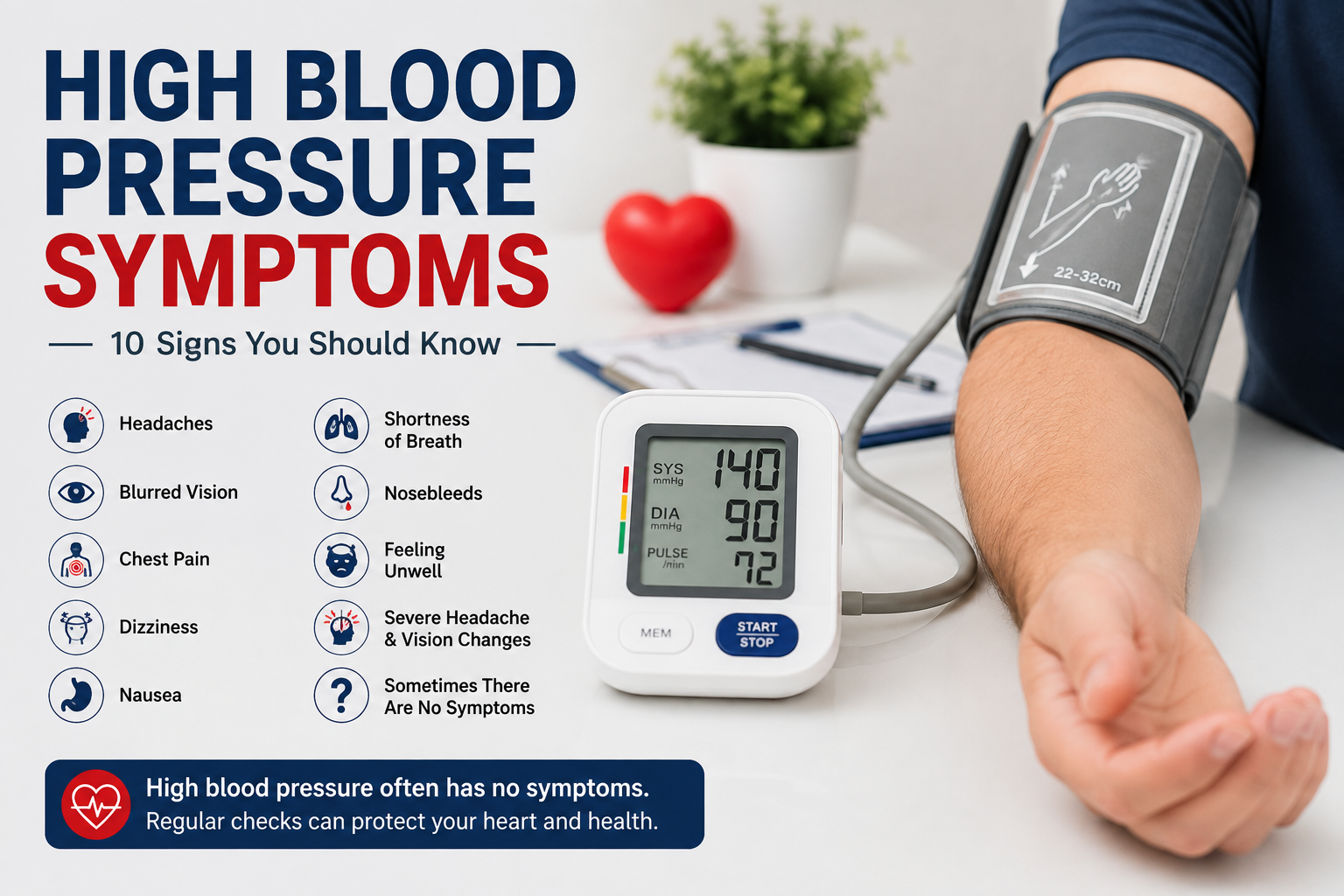
The only reliable way to find out whether your blood pressure is high is to have it measured. In the UK, blood pressure is generally considered high when it is 140/90 mmHg or higher in a healthcare setting, or 135/85 mmHg or higher when measured at home. A diagnosis usually requires repeated measurements rather than relying on a single reading.
What Is High Blood Pressure?
Blood pressure is the force of your blood pushing against the walls of your arteries as your heart pumps blood around your body.
A blood pressure reading has two numbers:
- Systolic pressure: the higher number, recorded when your heart contracts.
- Diastolic pressure: the lower number, recorded when your heart relaxes between beats.
For example, a reading of 130/80 mmHg has a systolic pressure of 130 and a diastolic pressure of 80.
Blood pressure naturally changes throughout the day. Physical activity, stress, caffeine and other factors can temporarily affect your reading. This is why healthcare professionals may recommend repeated measurements or home monitoring when assessing possible hypertension.
Does High Blood Pressure Cause Symptoms?
Usually, no.
Most people with high blood pressure do not feel any different. You can have hypertension for years without experiencing obvious symptoms.
This is why high blood pressure is sometimes described as a “silent” condition. Regular blood pressure checks are important, particularly if you have risk factors such as increasing age, excess weight, smoking, a high-salt diet, drinking too much alcohol or a family history of hypertension.
Possible High Blood Pressure Symptoms
Although hypertension usually has no symptoms, some people may experience symptoms when blood pressure is very high or when another health problem is present.
1. Headaches
Headaches can happen for many different reasons, and having a headache does not automatically mean that you have high blood pressure.
If you experience frequent or severe headaches, it is better to have your blood pressure checked rather than assuming that hypertension is the cause.
2. Blurred Vision
Changes in vision, including blurred vision, can sometimes occur with very high blood pressure.
However, blurred vision has many possible causes. If you develop sudden or significant changes in your vision, seek appropriate medical advice rather than trying to diagnose the cause yourself.
3. Chest Pain
Chest pain is not a typical symptom of uncomplicated high blood pressure, but it can be a warning sign of a serious heart or cardiovascular problem.
Seek emergency medical help if chest pain is severe, persistent, or occurs together with symptoms such as:
- Shortness of breath
- Sweating
- Nausea
- Pain spreading to the arm, neck or jaw
- Feeling faint
4. Dizziness
Dizziness is not a reliable sign of high blood pressure.
It can have many causes, including dehydration, low blood pressure, inner-ear problems, medication effects and other medical conditions.
If dizziness is persistent, severe or accompanied by other concerning symptoms, speak with a healthcare professional.
5. Nausea or Vomiting
Nausea and vomiting can occur with many different illnesses and are not specific symptoms of hypertension.
If these symptoms occur together with a severe headache, vision changes, chest pain, weakness or other serious symptoms, seek medical assessment.
6. Shortness of Breath
Shortness of breath is not usually caused by uncomplicated high blood pressure.
However, uncontrolled hypertension can increase the long-term risk of cardiovascular problems.
Sudden or severe difficulty breathing requires urgent medical attention.
7. Nosebleeds
Nosebleeds have many possible causes, including dry air, irritation, allergies and minor injuries.
A nosebleed by itself does not mean that you have high blood pressure.
If you experience frequent nosebleeds or other concerning symptoms, speak with a healthcare professional.
8. Feeling Unusually Unwell
Very high blood pressure may sometimes occur with a general feeling of being unwell, particularly when accompanied by other symptoms such as severe headache, vision changes, chest pain or neurological symptoms.
These symptoms should not be ignored.
9. Severe Headache With Vision Changes
A severe headache combined with blurred vision or other sudden visual changes deserves medical attention.
These symptoms can have causes other than high blood pressure, so professional assessment is important.
10. No Symptoms at All
This is the most important point.
You can have high blood pressure and feel completely normal.
That is why checking your blood pressure is much more reliable than waiting for symptoms.
How Is High Blood Pressure Diagnosed?
A single high blood pressure reading does not necessarily mean that you have hypertension.
If your blood pressure is high during a clinic or GP appointment, you may be asked to have further measurements.
Healthcare professionals may recommend:
- Repeated clinic measurements
- Home blood pressure monitoring
- Ambulatory blood pressure monitoring
These methods can provide a better picture of your usual blood pressure over time.
How to Check Your Blood Pressure at Home
When measuring your blood pressure at home:
- Sit upright in a chair with your back supported.
- Keep both feet flat on the floor.
- Rest your arm on a table.
- Relax before taking the measurement.
- Avoid talking while the monitor is measuring.
- Follow the instructions supplied with your monitor.
- Take additional readings if your healthcare professional recommends them.
Correct positioning and technique can affect the result.
What Increases the Risk of High Blood Pressure?
Several factors can increase your risk of developing hypertension.
These include:
- Getting older
- Having a family history of high blood pressure
- Being overweight
- Eating too much salt
- Not getting enough physical activity
- Smoking
- Drinking too much alcohol
- Long-term stress
- Certain medical conditions
- Some medicines
Your risk can depend on a combination of factors rather than one single cause.
How Can You Lower Your Blood Pressure?
If you have high blood pressure, lifestyle changes can help improve your cardiovascular health and may lower your blood pressure.
Eat a Balanced Diet
Try to eat a varied diet containing vegetables, fruit, whole grains and other nutritious foods.
Reducing your intake of foods high in salt can also help manage blood pressure.
Exercise Regularly
Regular physical activity is beneficial for heart health.
For many adults, aiming for around 150 minutes of moderate physical activity each week is a useful general goal, provided exercise is safe for you.
If you have a medical condition or are unsure what level of exercise is appropriate, speak with a healthcare professional first.
Maintain a Healthy Weight
If you are overweight, losing weight can help improve blood pressure and overall cardiovascular health.
Even modest lifestyle changes can be beneficial.
Stop Smoking
Smoking increases the risk of cardiovascular disease.
Stopping smoking can significantly benefit your heart and blood vessels.
Limit Alcohol
Drinking too much alcohol can contribute to high blood pressure.
Reducing alcohol intake can therefore be an important part of maintaining healthier blood pressure.
Take Prescribed Medicines as Directed
Some people need medication to control hypertension.
If you have been prescribed blood pressure medication, take it exactly as directed.
Do not stop or change your medication without speaking with your doctor or another qualified healthcare professional.
When Should You See a Doctor?
Arrange a blood pressure check if:
- You think you may have high blood pressure.
- You have risk factors for hypertension.
- You repeatedly get high readings at home.
- You regularly experience symptoms that concern you.
- You have been advised to monitor your blood pressure.
In the UK, blood pressure can be checked through GP services, some pharmacies and other healthcare settings.
In Canada, you can discuss blood pressure screening and monitoring with a family doctor, nurse practitioner, pharmacist or another qualified healthcare professional.
When Is High Blood Pressure an Emergency?
High blood pressure often causes no symptoms. However, some symptoms may indicate a serious medical emergency.
Seek emergency medical help immediately if you develop:
- Sudden or severe chest pain
- Severe difficulty breathing
- Sudden weakness or numbness, especially on one side of the body
- Difficulty speaking or understanding speech
- Sudden facial drooping
- Severe sudden neurological symptoms
- Loss of consciousness
- Sudden major changes in vision
In the UK
Call 999 if you believe you are experiencing a life-threatening emergency.
For urgent but non-life-threatening medical advice, NHS 111 may be appropriate.
In Canada
Call 911 for a medical emergency.
Frequently Asked Questions
What Are the First Signs of High Blood Pressure?
Most people have no noticeable symptoms.
When blood pressure becomes very high, some people may experience symptoms such as headache or visual changes, but symptoms alone cannot diagnose hypertension.
Can You Have High Blood Pressure Without Symptoms?
Yes.
Many people with hypertension feel completely normal.
Regular blood pressure checks are therefore important.
Can Headaches Mean You Have High Blood Pressure?
Headaches can occur for many reasons.
Although severe hypertension can sometimes be associated with headaches, having a headache does not automatically mean that you have high blood pressure.
The best way to find out is to measure your blood pressure.
What Blood Pressure Is Considered High?
According to UK guidance, clinic blood pressure of 140/90 mmHg or higher is generally considered high, while home blood pressure of 135/85 mmHg or higher is considered high.
However, diagnosis should be based on appropriate measurements rather than a single reading.
How Can I Check My Blood Pressure at Home?
You can use a suitable home blood pressure monitor.
Sit quietly, keep your feet flat on the floor, support your arm and follow the manufacturer’s instructions.
Your healthcare professional may recommend taking multiple readings over several days.
Can High Blood Pressure Be Cured?
High blood pressure can often be effectively controlled with lifestyle changes, medication, or a combination of both.
The appropriate treatment depends on your individual health and risk factors.
Final Takeaway
High blood pressure often has no symptoms.
That is why regular blood pressure checks are more important than waiting for warning signs.
If you are concerned about your blood pressure, arrange a check with a qualified healthcare professional.
If you develop sudden chest pain, severe breathing difficulty, sudden weakness, difficulty speaking or other serious symptoms, seek emergency medical help immediately.
Medical Disclaimer
This article is intended for general educational and informational purposes only. It is not a substitute for professional medical advice, diagnosis or treatment.
Symptoms can have many different causes. If you are concerned about your blood pressure or any symptoms you are experiencing, speak with a qualified healthcare professional.
Hello Doctor Zone does not provide emergency medical care. In an emergency, contact your local emergency service.