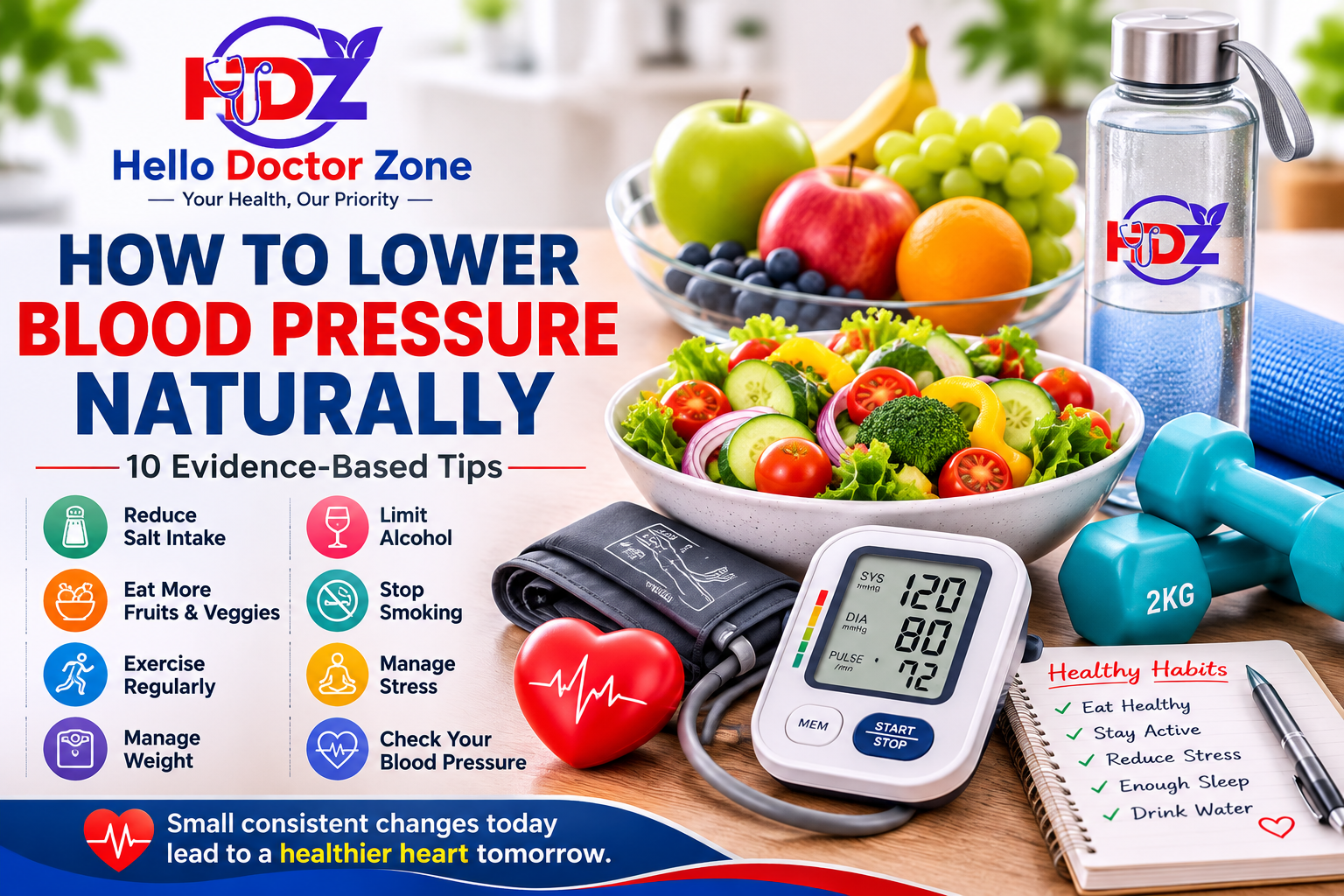
How to Lower Blood Pressure Quickly and Safely
Author: Hello Doctor Zone Editorial Team
Last updated: September 30, 2026
Reading time: 8–10 minutes
High blood pressure, also called hypertension, is common and often causes no obvious symptoms. If your blood pressure reading is higher than usual, you may wonder how to lower blood pressure quickly and whether there is something you can do immediately.
The important thing to understand is that there is no guaranteed safe home method that instantly brings high blood pressure back to normal. The safest approach depends on how high the reading is, whether you have symptoms, and whether you have already been diagnosed with hypertension.
Healthy lifestyle changes can help lower blood pressure over time, while some people also need prescription medication. NICE recommends lifestyle advice for people with raised or diagnosed high blood pressure, including healthy eating, regular physical activity, reducing excessive alcohol intake, reducing sodium, limiting excessive caffeine and stopping smoking.
If you are concerned about your blood pressure, this guide explains practical steps you can take safely.
What Is High Blood Pressure?
Blood pressure is recorded using two numbers.
- Systolic pressure: the top number, showing pressure when your heart beats.
- Diastolic pressure: the bottom number, showing pressure when your heart relaxes between beats.
A single high reading does not necessarily mean you have hypertension. Blood pressure can temporarily rise because of stress, physical activity, caffeine, illness or other factors.
In the UK, NICE recommends confirming hypertension using repeated measurements, often with ambulatory or home blood pressure monitoring rather than relying on a single reading.
If you want to understand blood pressure numbers in more detail, read our guide:
👉 What Is a Normal Blood Pressure Reading? Numbers Explained
How to Lower Blood Pressure Safely
1. Sit Quietly and Recheck Your Blood Pressure
If you unexpectedly get a high reading, don’t immediately panic.
Sit quietly, keep your feet flat on the floor, support your arm and avoid talking while measuring. Then repeat the reading.
The American Heart Association recommends repeating a very high reading after at least one minute. A single high reading may not provide enough information to determine whether you have persistent hypertension.
For home monitoring, try to measure your blood pressure under similar conditions each time and keep a record of your results.
2. Reduce Your Salt Intake
Eating too much sodium can contribute to high blood pressure. Reducing salt intake is therefore one of the most useful dietary changes for people with raised blood pressure.
Instead of adding extra salt to meals, try using herbs, spices, garlic, lemon or other salt-free seasonings for flavour.
Also check packaged foods because foods such as processed meats, ready meals, sauces, soups and salty snacks can contain significant amounts of sodium.
NICE recommends keeping dietary sodium intake low because reducing sodium can help reduce blood pressure.
Simple habit:
Before adding salt to your meal, taste the food first.
3. Eat More Heart-Healthy Foods
A balanced diet can support healthy blood pressure.
Try to include more:
- Vegetables
- Fruits
- Beans and lentils
- Whole grains
- Nuts and seeds
- Fish
- Lean protein
- Lower-fat dairy products where appropriate
At the same time, reduce your intake of highly processed foods, foods high in salt, and foods high in saturated fat.
A healthy eating pattern is not about one particular food that dramatically lowers blood pressure. Instead, the overall quality of your diet matters.
NICE recommends healthy eating and regular exercise as part of lifestyle management for hypertension.
4. Exercise Regularly
Regular physical activity can help lower blood pressure and improve cardiovascular health.
For many adults, a practical goal is to build towards around 150 minutes of moderate physical activity per week, provided this is appropriate for their health and fitness level. The NHS recommends regular exercise as part of managing high blood pressure.
You don’t necessarily need an expensive gym membership.
You could start with:
- Brisk walking
- Cycling
- Swimming
- Dancing
- Gardening
- Active household activities
If you have been inactive for a long time or have a medical condition, start gradually and speak with a healthcare professional if you are unsure what level of exercise is appropriate.
5. Lose Weight If You Are Overweight
If you are overweight, losing weight can help improve blood pressure and overall cardiovascular health.
You don’t need to make extreme changes. Sustainable habits such as eating balanced meals, reducing highly processed foods and becoming more physically active can support gradual weight management.
The NHS lists losing weight when overweight as one of the lifestyle measures that can help lower blood pressure.
If you are trying to lose weight, focus on long-term habits rather than crash diets.
6. Limit Alcohol
Regularly drinking too much alcohol can contribute to higher blood pressure.
If you drink alcohol, reducing your intake can be beneficial. NHS guidance advises adults not to regularly drink more than 14 units of alcohol per week.
You can also have several alcohol-free days each week.
If you do not drink alcohol, there is no health reason to start drinking.
7. Stop Smoking
Smoking does not simply affect your lungs. Tobacco use also damages blood vessels and increases cardiovascular risk.
Stopping smoking is one of the most important things you can do for your overall heart and blood vessel health.
NICE recommends offering advice and support to people who smoke to help them stop.
If quitting is difficult, speak with a healthcare professional or an approved smoking-cessation service about available support.
8. Be Careful With Excessive Caffeine
Coffee, tea, energy drinks and cola can contain caffeine.
For some people, caffeine can temporarily increase blood pressure. NICE specifically recommends avoiding excessive consumption of coffee and other caffeine-rich products in people with hypertension.
If you notice that your blood pressure readings are higher after consuming large amounts of caffeine, consider reducing your intake and discuss persistent high readings with a healthcare professional.
Do not rely on caffeine withdrawal as a treatment for diagnosed hypertension.
9. Manage Stress and Improve Sleep
Long-term stress can make healthy habits more difficult and may contribute to unhealthy behaviours such as overeating, smoking or drinking too much alcohol.
Try practical stress-management strategies such as:
- Walking outdoors
- Deep breathing
- Relaxing activities
- Spending time with friends or family
- Maintaining a regular sleep schedule
- Taking breaks from work or screens
Stress management should be considered part of an overall healthy lifestyle rather than a replacement for medical treatment.
If you regularly have difficulty sleeping or suspect a sleep disorder, discuss this with a healthcare professional.
10. Take Prescribed Blood Pressure Medicine as Directed
Lifestyle changes are important, but they do not replace medication for everyone.
Some people with hypertension need prescription medication to reduce their risk of heart attack, stroke and other complications.
NICE recommends antihypertensive medication alongside lifestyle measures for adults with persistent stage 2 hypertension and for certain people with stage 1 hypertension depending on their cardiovascular risk and other health conditions.
Never stop, reduce or change your blood pressure medication without speaking with your healthcare professional.
If your blood pressure remains high despite lifestyle changes, your treatment may need to be reviewed.
How to Lower Blood Pressure Quickly at Home
If your blood pressure is temporarily higher than normal, the safest immediate steps are generally to:
- Stop exercising and sit somewhere quiet.
- Rest for several minutes.
- Keep your feet flat on the floor.
- Support your arm at approximately heart level.
- Avoid talking while measuring.
- Repeat the measurement.
- Record both readings.
- Contact a healthcare professional if the readings remain unusually high.
These steps can help you obtain a more reliable measurement, but they are not a substitute for medical treatment.
If a reading is repeatedly very high, don’t try to force it down with home remedies.
What Blood Pressure Is Too High?
Blood pressure above 180/120 mmHg is considered severe and requires prompt attention.
The American Heart Association recommends waiting at least one minute and repeating a reading this high. If it remains above 180/120, contact a healthcare professional promptly.
NICE guidance similarly treats a clinic blood pressure of 180/120 mmHg or higher as severe hypertension requiring assessment, with same-day specialist assessment when certain serious symptoms or signs are present.
When Is High Blood Pressure an Emergency?
Very high blood pressure together with certain symptoms can indicate a medical emergency.
Seek emergency medical help if you have a very high blood pressure reading together with symptoms such as:
- Chest pain
- Severe shortness of breath
- New confusion
- Weakness or numbness
- Difficulty speaking
- Significant changes in vision
- Other sudden or severe symptoms
The American Heart Association identifies blood pressure above 180/120 mmHg with symptoms such as chest pain, shortness of breath, weakness, vision changes or difficulty speaking as a hypertensive emergency.
In the UK, call 999 for life-threatening emergencies such as suspected heart attack or stroke. NHS 111 can provide urgent advice when you are unsure what level of care you need.
Can You Lower Blood Pressure Without Medicine?
Sometimes lifestyle changes can significantly improve blood pressure, particularly when blood pressure is mildly raised.
However, not everyone can control hypertension through lifestyle changes alone.
The right treatment depends on factors such as:
- Your blood pressure readings
- Your age
- Cardiovascular risk
- Kidney health
- Diabetes
- Previous heart or blood vessel disease
- Other medical conditions
- Response to lifestyle changes
For some people, medication is necessary even when they follow a healthy lifestyle.
If you have already been prescribed medication, continue taking it as directed unless your healthcare professional tells you otherwise.
How Long Does It Take to Lower Blood Pressure?
There is no single timeline that applies to everyone.
Some lifestyle changes can affect blood pressure relatively quickly, while other improvements may take weeks or longer.
For example, reducing salt intake, becoming more physically active, losing excess weight and reducing alcohol consumption can contribute to better blood pressure control over time.
The goal should not be to chase an instant number. The goal is to achieve consistent, healthy blood pressure over the long term.
Keeping a blood pressure diary can help you and your healthcare professional see whether your changes are working. Home monitoring can also help identify patterns over time.
Related Reading
If you want to learn more about high blood pressure, read:
High Blood Pressure Symptoms: 10 Signs You Should Know
You can also read:
10 Ways to Manage High Blood Pressure Without Medicine
And:
What Is a Normal Blood Pressure Reading? Numbers Explained
Frequently Asked Questions
1. How can I lower my blood pressure quickly?
There is no guaranteed home method that instantly normalises high blood pressure. If you get a high reading, sit quietly, measure again correctly and seek medical advice if it remains unusually high. Lifestyle changes can help lower blood pressure over time.
2. Does drinking water lower blood pressure?
Drinking enough fluid is important for normal body function, but drinking extra water is not a reliable treatment for hypertension. If your blood pressure is high, don’t rely on water alone to lower it.
3. Can walking lower blood pressure?
Regular physical activity, including walking, can help improve blood pressure over time. If you are new to exercise, start gradually and choose an activity that is appropriate for your health.
4. Can reducing salt lower blood pressure?
Yes. Reducing dietary sodium can help lower blood pressure, which is why NICE recommends keeping sodium intake low for people with hypertension.
5. Should I stop my blood pressure medicine if my reading becomes normal?
No. A normal reading may mean that your treatment is working. Do not stop or change prescribed medication without speaking with your healthcare professional.
6. Is 180/120 blood pressure dangerous?
A reading of 180/120 mmHg or higher is very high. Repeat the reading after at least one minute. If it remains this high, seek prompt medical advice. If it occurs with serious symptoms such as chest pain, shortness of breath, weakness, vision changes or difficulty speaking, seek emergency medical help.
7. Can stress temporarily raise blood pressure?
Yes, stress can affect blood pressure. However, repeated high readings should not automatically be blamed on stress. Persistent hypertension should be assessed by a healthcare professional.
Final Takeaway
If you’re wondering how to lower blood pressure, focus on safe and sustainable changes rather than quick fixes.
Regular physical activity, a balanced diet, less dietary salt, maintaining a healthy weight, limiting alcohol, avoiding smoking and monitoring your blood pressure can all support better blood pressure control.
However, lifestyle changes are not always enough. Some people need prescription medication, and very high blood pressure can require urgent medical assessment.
If your blood pressure is repeatedly high, speak with a qualified healthcare professional rather than trying to treat it yourself.
Medical Disclaimer
This article is for general educational and informational purposes only. It is not a substitute for professional medical advice, diagnosis or treatment. Blood pressure targets and treatment can vary depending on age, pregnancy, medical conditions and individual cardiovascular risk. Never stop or change prescribed medication without consulting a qualified healthcare professional. If you experience severe or life-threatening symptoms, seek emergency medical care.
Author: Hello Doctor Zone Editorial Team
Last updated: September 30, 2026
References
- NHS – High Blood Pressure NHS: High blood pressure
- NICE – Hypertension in adults: diagnosis and management (NG136) NICE: Hypertension in adults
- American Heart Association – Understanding Blood Pressure Readings American Heart Association: Blood pressure readings
- American Heart Association – Home Blood Pressure Monitoring American Heart Association: Home monitoring
- NHS – When to Call 999 NHS: When to call 999