What Is a Normal Blood Pressure Reading? Numbers Explained
What Is a Normal Blood Pressure Reading? Numbers Explained
Author: Hello Doctor Zone Editorial Team Last updated: September 18, 2026 Reading time: 8–10 minutes
Introduction
Blood pressure is one of the simplest health measurements, but knowing what the numbers actually mean can be confusing.
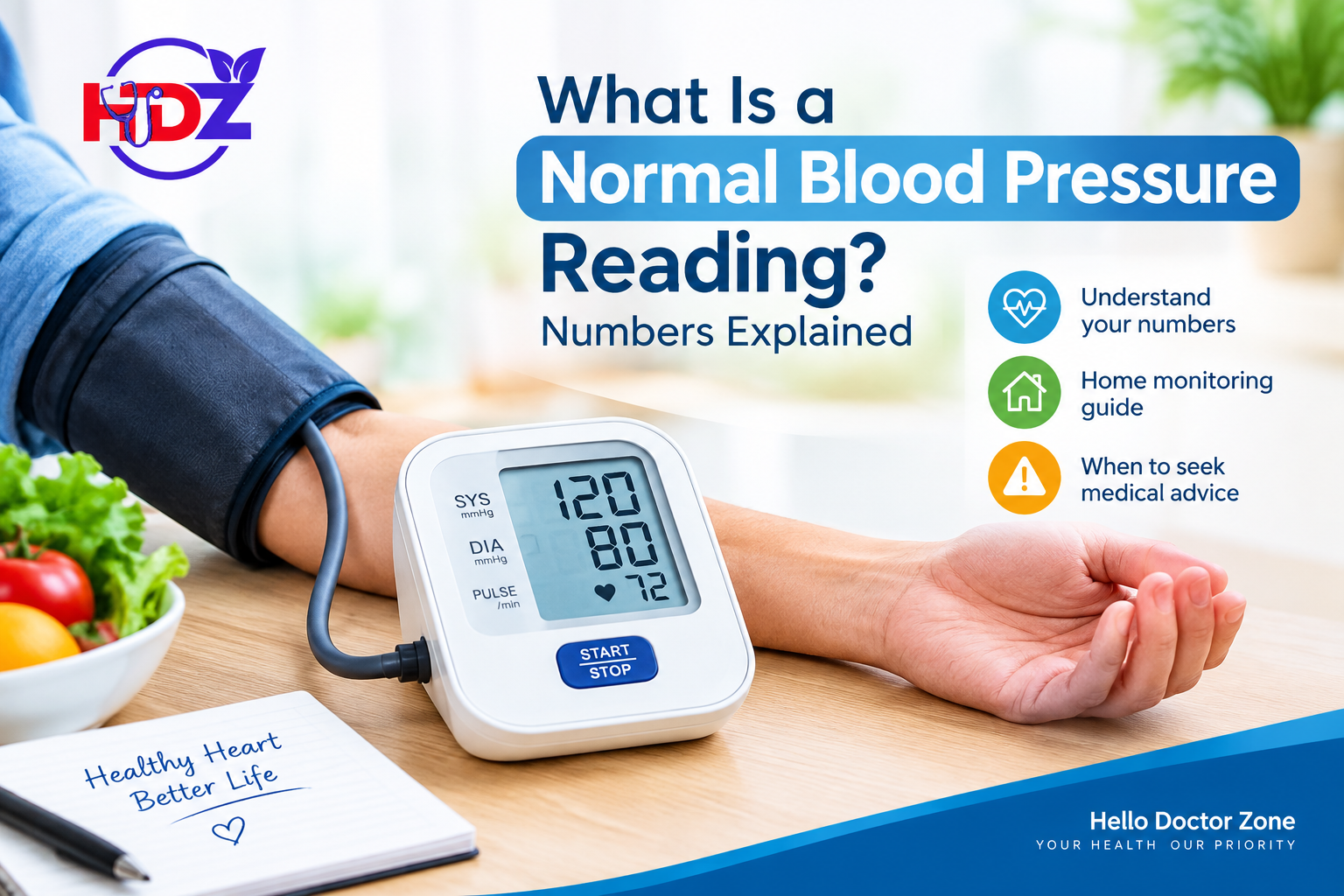
A blood pressure reading is usually written as two numbers, such as 120/80 mmHg. The first number is systolic blood pressure, while the second is diastolic blood pressure.
A single reading does not always tell the full story. Blood pressure can vary depending on the time of day, activity, stress and how the measurement is taken.
This guide explains what different blood pressure numbers can mean, how to measure your blood pressure at home, and when you should speak with a healthcare professional.
It measures the pressure in your arteries when your heart contracts and pumps blood around your body.
2. Diastolic blood pressure
The bottom number is called diastolic blood pressure.
It measures the pressure in your arteries while your heart relaxes between beats.
For example:
120/80 mmHg
120 = systolic pressure
80 = diastolic pressure
mmHg = millimetres of mercury
What Is a Normal Blood Pressure Reading?
For many adults, a reading around 120/80 mmHg is commonly used as an example of a healthy blood pressure reading.
However, there is not one single blood pressure number that is ideal for everyone.
According to the NHS, blood pressure is generally considered high when it is 140/90 mmHg or higher when measured by a healthcare professional, or 135/85 mmHg or higher when measured at home.
Your healthcare professional may use different targets depending on your age and health conditions.
Blood Pressure Numbers: What Do They Mean?
A simple guide is:
Blood pressure reading
General meaning
Around 120/80 mmHg
Commonly considered a healthy reading
120/80 to below 140/90
May require monitoring depending on the circumstances
140/90 mmHg or higher in a clinical setting
May indicate high blood pressure
135/85 mmHg or higher at home
May indicate high blood pressure
These figures are general guidance, not a diagnosis. Diagnosis may require repeated measurements or home/ambulatory monitoring.
In Canada, Hypertension Canada also uses out-of-office measurements as part of assessing suspected hypertension, with a home blood pressure average of 135/85 mmHg or higher considered high.
Is 120/80 Always the Perfect Blood Pressure?
Not necessarily.
Blood pressure naturally changes throughout the day. It can temporarily increase after exercise, during stress or after consuming caffeine.
It can also vary between measurements.
That’s why healthcare professionals may look at multiple readings rather than relying on one measurement.
If you occasionally get a slightly higher reading, don’t assume that you have hypertension based on that reading alone.
What Is Considered High Blood Pressure?
High blood pressure, also called hypertension, means that blood pressure remains higher than recommended over time.
In the UK, the NHS generally considers blood pressure high at:
140/90 mmHg or above when checked by a healthcare professional
135/85 mmHg or above when checked at home
In Canada, assessment can involve office measurements as well as home or ambulatory monitoring.
If your readings are repeatedly high, speak with a healthcare professional.
How to Check Your Blood Pressure at Home
Home blood pressure monitoring can provide useful information when done correctly.
The NHS recommends taking a reading, recording it, waiting about one minute and taking another reading. Your healthcare professional can tell you how many days you should monitor it.
For a more reliable reading:
Sit quietly for a few minutes.
Keep your back supported.
Keep your feet flat on the floor.
Rest your arm on a table.
Place the cuff correctly on your upper arm.
Do not talk during the measurement.
Take two readings about one minute apart.
Record the results.
Hypertension Canada recommends a home-monitoring series using duplicate morning and evening readings over seven days, with the first day’s readings excluded from the average.
Why Can Blood Pressure Be High Temporarily?
Your blood pressure can change from one measurement to another.
Temporary increases may occur because of:
Exercise
Stress or anxiety
Caffeine
Smoking
Pain
Lack of rest
Incorrect measurement technique
This is one reason healthcare professionals may repeat measurements before deciding whether someone has hypertension.
What If My Blood Pressure Is High?
If your blood pressure is repeatedly high, don’t ignore it.
Make an appointment with a healthcare professional who can assess your readings and decide whether you need further monitoring or treatment.
Lifestyle changes such as regular physical activity, eating a healthy diet, reducing salt and limiting alcohol can help manage high blood pressure. Some people may also need medication.
Do not stop prescribed blood pressure medication without speaking with your doctor or healthcare professional.
What If My Blood Pressure Is Low?
Low blood pressure can occur in some healthy people and may not always be a problem.
However, if low blood pressure is accompanied by symptoms such as:
Dizziness
Fainting
Weakness
Blurred vision
Confusion
Lifestyle changes such as regular physical activity, eating a healthy diet, reducing salt and limiting alcohol can help manage high blood pressure. For more practical tips, see our guide on 10 Ways to Manage High Blood Pressure Without Medicine.
you should seek medical advice.
A healthcare professional can help determine whether your blood pressure is too low for you and whether an underlying problem needs to be investigated.
When Should You Seek Urgent Medical Help?
If you have a very high blood pressure reading together with concerning symptoms, seek urgent medical attention.
Symptoms such as:
Severe chest pain
Severe difficulty breathing
Sudden weakness or numbness
Sudden difficulty speaking
Severe confusion
Loss of consciousness
can require emergency assessment.
If you are in the UK, call 999 for a life-threatening emergency. In Canada, call 911.
Frequently Asked Questions
Is 120/80 a normal blood pressure?
A reading of around 120/80 mmHg is commonly used as an example of a healthy blood pressure reading. However, your appropriate blood pressure range can depend on your individual circumstances.
Is 130/80 high blood pressure?
A reading of 130/80 does not automatically mean that you have hypertension. Blood pressure should be interpreted in context and, when necessary, assessed using repeated or out-of-office measurements.
Is 140/90 considered high?
In the UK, 140/90 mmHg or higher when measured by a healthcare professional is generally considered high. Home readings use a lower threshold of 135/85 mmHg or higher.
How often should I check my blood pressure?
How often you should check it depends on your age, health and whether you have been diagnosed with high blood pressure. If you’re monitoring at home, follow the schedule recommended by your healthcare professional.
Can one high reading mean I have hypertension?
Not necessarily. Blood pressure can change throughout the day, so healthcare professionals may use repeated readings or home/ambulatory monitoring to confirm the situation.
Final Takeaway
Understanding your blood pressure numbers can help you take better care of your cardiovascular health.
A reading such as 120/80 mmHg is commonly used as a healthy example, while repeated readings around 140/90 mmHg or higher in a clinical setting or 135/85 mmHg or higher at home may indicate high blood pressure and should be discussed with a healthcare professional.
If you regularly monitor your blood pressure, keep a record of your readings and share them with your healthcare professional when appropriate.














Add a Comment