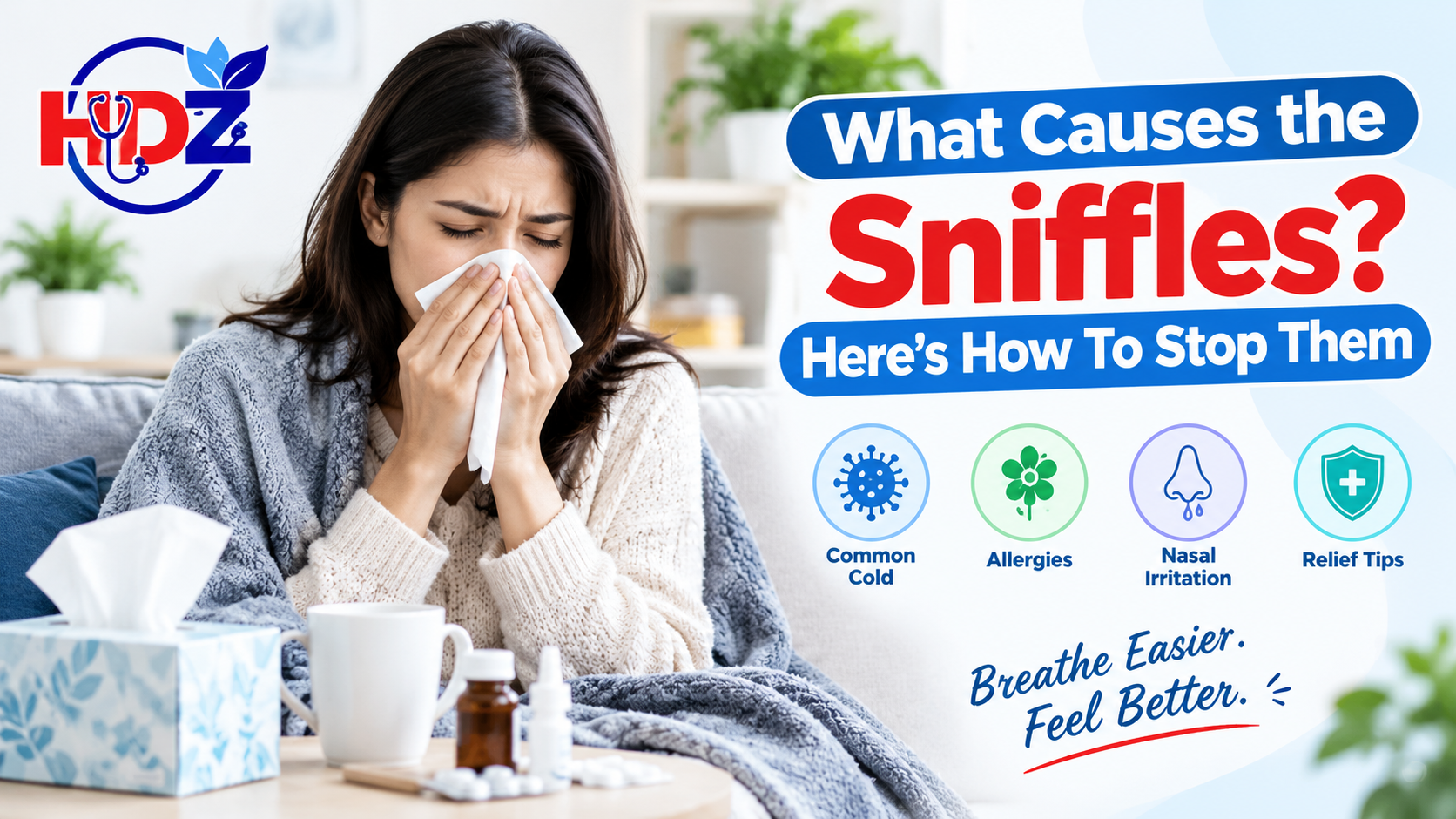
A constantly runny or stuffy nose can be frustrating. Whether you keep reaching for tissues, sneeze several times in a row, or wake up with a blocked nose, these symptoms can interfere with your daily routine and sleep.
The sniffles are common and can have several causes, including the common cold, allergies, changes in the weather, and exposure to irritants such as smoke or strong perfume.
The good news is that many cases can be managed with simple self-care. The best way to stop the sniffles, however, depends on what is causing them.
In this guide, we explain the common causes of the sniffles, practical ways to relieve symptoms, and warning signs that mean you may need medical advice.
1. What Are the Sniffles?
The term “sniffles” usually describes a runny nose, a stuffy nose, or repeated sneezing. Some people also experience watery eyes, throat irritation, or mucus dripping down the back of the throat.
A runny nose occurs when fluid drains from the nose. A stuffy nose happens when the tissues inside the nose become irritated or swollen, making it harder to breathe comfortably.
The sniffles are a symptom rather than a specific disease. Identifying the underlying cause can help you choose the most appropriate treatment.
2. What Causes the Sniffles?
Several conditions and environmental factors can cause a runny or stuffy nose.
Common Cold
The common cold is one of the most frequent causes of the sniffles. It is caused by respiratory viruses and may produce sneezing, a runny nose, a sore throat, coughing, and mild tiredness.
Cold symptoms often develop gradually over a few days. Most people begin to feel better within one to two weeks, although some symptoms can last longer.
Allergies and Hay Fever
Allergies can cause a runny nose, repeated sneezing, nasal congestion, and itchy or watery eyes.
Common triggers include pollen, dust mites, mould, and animal dander. Allergy symptoms may continue for as long as you are exposed to the trigger.
Unlike a common cold, allergies do not usually cause a fever and are not contagious.
Cold Air and Weather Changes
Some people develop a runny nose when exposed to cold air, changes in humidity, or sudden temperature changes.
This may happen because the nose reacts to environmental conditions. The symptoms do not necessarily mean that you have an infection.
Smoke, Dust, and Strong Smells
Cigarette smoke, air pollution, cleaning products, perfume, and paint fumes can irritate the lining of the nose.
This irritation may lead to sneezing, a runny nose, or congestion, even when you do not have a cold or an allergy.
Other Possible Causes
Other causes include sinus inflammation, certain medicines, hormonal changes, and non-allergic rhinitis.
If the sniffles occur frequently, last a long time, or mainly affect one side of your nose, a healthcare professional can help identify the cause.
3. How Can You Tell If It Is a Cold or an Allergy?
Colds and allergies can cause similar symptoms, but a few clues may help you distinguish between them.
A cold is more likely if you have:
A sore throat or cough
Mild body aches or tiredness
Symptoms that develop gradually
Symptoms that improve over several days
An allergy is more likely if you have:
Itchy eyes, nose, or throat
Frequent sneezing
Clear, watery nasal discharge
Symptoms that return around the same triggers
Symptoms that continue for weeks while exposure persists
These patterns are not definitive. Respiratory infections, including flu and COVID-19, can also cause nasal symptoms. Seek medical advice if you are unsure, especially if symptoms are severe or you are at higher risk of complications.
4. How to Stop the Sniffles at Home
The right approach depends on the cause, but several simple measures may help relieve nasal symptoms.
Stay Hydrated
Drink water regularly throughout the day. Warm drinks may also help soothe an irritated throat and make you feel more comfortable.
Staying hydrated supports normal body functions, although drinking extra fluids will not cure a cold or allergy.
Use a Saline Nasal Spray
Saline nasal sprays contain a saltwater solution that can help moisturise the nasal passages and loosen mucus.
They may be useful for both runny and stuffy noses. Follow the product instructions and keep the nozzle clean.
If you use a nasal rinse device, use distilled, sterile, or previously boiled and cooled water. Never use untreated tap water for nasal irrigation.
Get Enough Rest
If your sniffles are caused by a cold, rest can help you recover while your body fights the infection.
Try to maintain a comfortable sleeping environment and give yourself time to recover if you feel unwell.
Avoid Smoke and Other Irritants
Reduce exposure to cigarette smoke, strong fragrances, dust, and cleaning fumes if they trigger your symptoms.
Avoiding known irritants may be particularly helpful if you experience non-allergic rhinitis.
Try a Clean Humidifier if the Air Is Dry
A clean humidifier may make dry indoor air more comfortable for some people.
Follow the manufacturer’s cleaning instructions carefully. A poorly maintained humidifier can encourage mould and microorganisms, potentially making respiratory symptoms worse.
Manage Allergy Triggers
If allergies are responsible, try to reduce exposure to the substances that trigger your symptoms.
Depending on the trigger, helpful steps may include keeping windows closed when pollen levels are high, washing your hands and face after outdoor activities, changing clothes after coming indoors, and reducing dust in your home.
5. Which Medicines May Help Stop the Sniffles?
Medicines can help relieve certain nasal symptoms, but the best option depends on whether the cause is an allergy, a cold, or another condition.
Antihistamines for Allergies
Antihistamines can help relieve allergy-related sneezing, a runny nose, and itchy or watery eyes.
Some antihistamines cause drowsiness. Check the label and ask a pharmacist which option is suitable for you, particularly if you take other medicines or need to drive.
Nasal Steroid Sprays
Nasal corticosteroid sprays can help control inflammation associated with allergic rhinitis. They may work best when used regularly as directed, rather than only when symptoms are severe.
Ask a pharmacist or healthcare professional whether one is appropriate for your symptoms and how to use it correctly.
Decongestants for a Blocked Nose
Decongestants may provide short-term relief from nasal congestion. They are not suitable for everyone, and some can interact with medicines or affect blood pressure.
Decongestant nasal sprays and drops should generally not be used for more than seven consecutive days unless a healthcare professional advises otherwise. Overuse can make congestion worse.
Ask a pharmacist before using decongestants if you have high blood pressure, heart disease, glaucoma, are pregnant, or take other medicines.
Do You Need Antibiotics?
Antibiotics do not treat the viruses that cause the common cold. They should only be used when a healthcare professional determines that a bacterial infection requires them.
Yellow or green nasal mucus alone does not prove that you need antibiotics.
6. How Long Do the Sniffles Usually Last?
The duration depends on the underlying cause.
Common cold: Most people start to improve within one to two weeks.
Allergies: Symptoms may continue for weeks or months while exposure to allergens persists.
Irritant-related sniffles: Symptoms may improve after the trigger is removed, although this varies.
Persistent nasal inflammation: Symptoms may continue until the underlying cause is identified and managed.
If your symptoms last longer than 10 days without improvement, become worse after initially improving, or repeatedly return, consider seeking medical advice.
7. When Should You See a Doctor?
Many cases of the sniffles are mild, but some symptoms need medical attention.
Contact a healthcare professional if you have:
Symptoms lasting more than 10 days without improvement
A high or persistent fever
Significant facial pain or swelling
Symptoms that worsen after initially improving
Frequent or persistent nasal symptoms that interfere with sleep or daily life
Repeated nosebleeds or blood in nasal discharge
Seek urgent medical care if you experience difficulty breathing, severe symptoms, or swelling around the eyes with significant pain or vision changes.
Clear fluid draining continuously from one side of the nose after a head injury also requires urgent assessment.
For babies and young children, seek medical advice promptly if nasal congestion interferes with feeding or breathing.
8. Can You Prevent the Sniffles?
You cannot prevent every cold or allergy flare-up, but a few habits may reduce your risk of symptoms.
Wash your hands regularly, especially after coughing, sneezing, or being in public places.
Avoid close contact with people who are unwell when possible.
Avoid smoking and second-hand smoke.
Reduce exposure to known allergens and irritants.
Keep indoor spaces clean and manage dust or mould.
Follow recommended vaccinations for respiratory infections where applicable.
If you experience repeated symptoms around a particular trigger, keeping a simple symptom diary may help you identify a pattern to discuss with your healthcare professional.
9. Frequently Asked Questions About the Sniffles
What is the fastest way to stop the sniffles?
The fastest approach depends on the cause. Saline nasal spray may provide temporary relief, while antihistamines can help when allergies are responsible. A cold usually needs time to improve.
Why do I keep sneezing and having a runny nose?
Common causes include allergies, viral infections, smoke, dust, strong fragrances, and changes in temperature. Persistent symptoms may require an assessment to identify the cause.
Are the sniffles always a sign of a cold?
No. Allergies, non-allergic rhinitis, dry air, and environmental irritants can all cause similar symptoms without a cold.
Does yellow or green mucus mean I need antibiotics?
No. Nasal mucus can change colour during a viral infection. Colour alone cannot determine whether an infection is bacterial or whether antibiotics are necessary.
Can I use a nasal decongestant spray every day?
Some sprays are intended for short-term use only. Using decongestant sprays for longer than the recommended period can worsen congestion. Follow the label and ask a pharmacist if you need relief for more than a few days.
When should I worry about a runny nose?
Seek medical advice if symptoms persist for more than 10 days without improvement, worsen significantly, or occur with high fever or facial pain. Breathing difficulties and continuous clear nasal drainage after a head injury require urgent assessment.
Final Thoughts
The sniffles are common and can result from a cold, allergies, environmental irritants, or other nasal conditions. Understanding the likely cause is the first step toward finding relief.
Simple measures such as saline nasal spray, adequate rest, avoiding triggers, and staying hydrated may help. Medicines can also be useful when chosen for the right cause and used safely.
If symptoms persist, worsen, or occur with warning signs, speak with a healthcare professional rather than relying on home remedies alone.
Medical Disclaimer: This article is for educational and informational purposes only. It does not replace professional medical advice, diagnosis, or treatment. Consult a qualified healthcare professional about persistent or severe symptoms.














Add a Comment