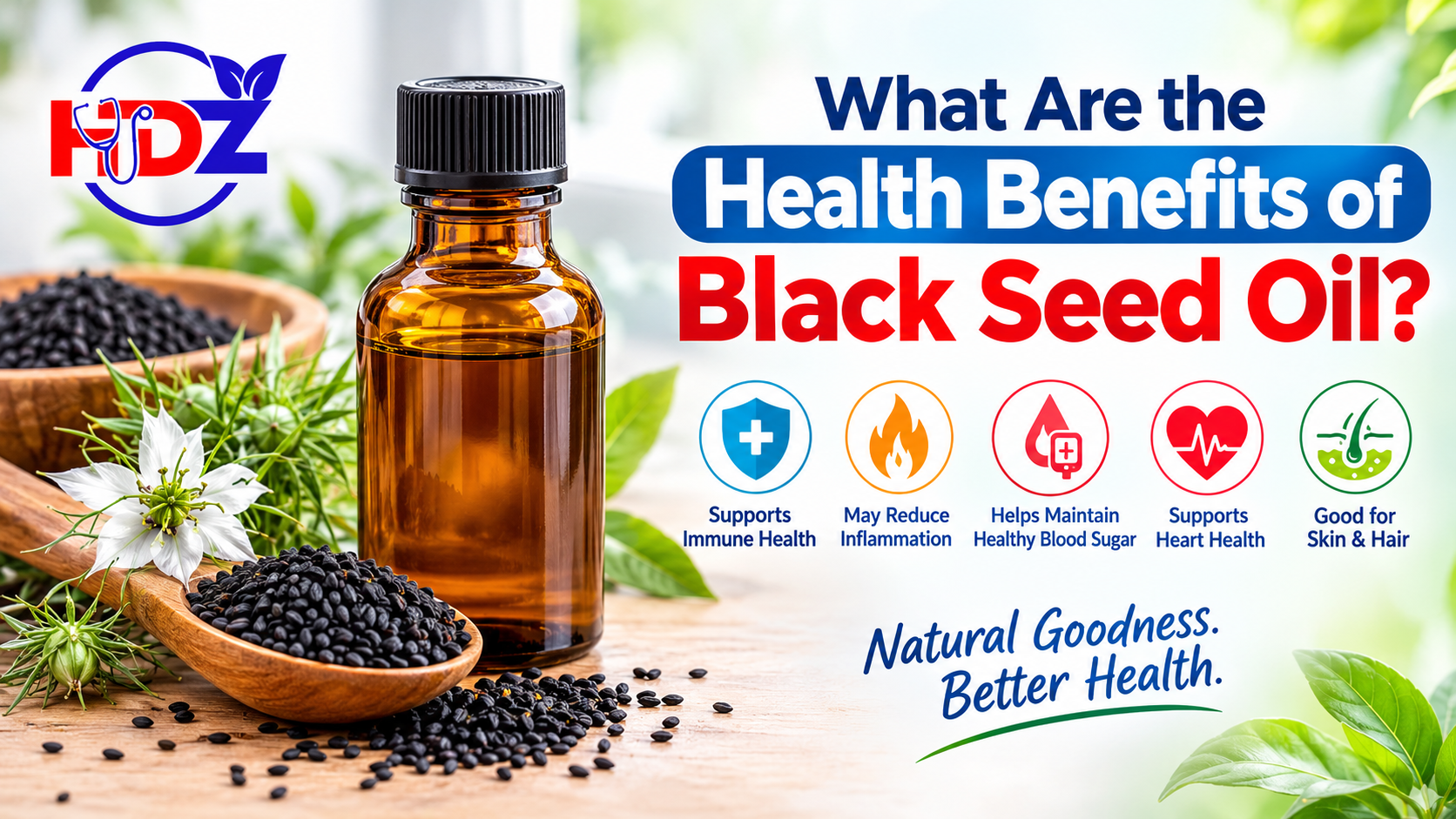
Black seed oil has been used in traditional medicine for centuries. Extracted from the seeds of Nigella sativa, a flowering plant also known as black seed or black cumin, this oil has attracted growing interest because of its potential health benefits.
People use black seed oil for general wellness, skin care, and to support healthy blood sugar and cholesterol levels. But what does scientific research actually say?
In this article, we explore seven potential health benefits of black seed oil, its possible side effects, how to use it safely, and what you should know before taking it as a supplement.
Important: Black seed oil is not a proven cure for any disease. Some research findings are promising, but the evidence remains limited. It should not replace prescribed medication or professional medical advice.
What Is Black Seed Oil?
Black seed oil is extracted from the seeds of Nigella sativa, a plant native to parts of Southwest Asia, the Middle East, and the Mediterranean region.
The seeds contain naturally occurring compounds, including thymoquinone, which has been studied for its antioxidant and anti-inflammatory properties.
Black seed oil is commonly sold as:
Liquid oil
Softgel capsules
Ingredients in certain skin care products
The quality and concentration of compounds can vary between products. This means the findings of one research study may not apply to every black seed oil supplement.
7 Potential Health Benefits of Black Seed Oil
Researchers have investigated several possible health effects of black seed oil. However, many studies have limitations, and more high-quality clinical trials are needed.
1. May Support a Healthy Inflammatory Response
Black seed oil contains compounds that have demonstrated anti-inflammatory activity in laboratory studies.
Some human studies have also examined whether black seed supplements may affect certain markers of inflammation. However, current evidence is not strong enough to conclude that black seed oil treats inflammatory diseases.
It should not be used as a substitute for prescribed treatment for conditions such as arthritis or other chronic inflammatory disorders.
2. May Help Support Healthy Blood Sugar Levels
Some clinical studies suggest that Nigella sativa preparations may improve certain blood sugar measurements in people with metabolic conditions.
However, results vary, and the evidence is not sufficient to recommend black seed oil as a treatment for diabetes.
People with diabetes should consult their healthcare professional before using it. Black seed oil may affect blood sugar, potentially increasing the risk of hypoglycaemia when combined with diabetes medication.
Never stop or reduce prescribed diabetes medication without medical guidance.
3. May Help Maintain Healthy Cholesterol Levels
Researchers have investigated whether black seed supplementation affects total cholesterol, LDL cholesterol, HDL cholesterol, and triglycerides.
Some studies have reported improvements in certain lipid measurements, but the evidence remains uncertain. Black seed oil is not a proven replacement for cholesterol-lowering medication.
A balanced diet, regular physical activity, and prescribed treatment when necessary remain important for maintaining healthy cholesterol levels.
4. May Support Healthy Blood Pressure
Small studies have explored whether black seed preparations may help lower blood pressure in some people. The findings are interesting, but more reliable research is needed.
Black seed oil should not be considered a proven treatment for hypertension.
If you have high blood pressure, continue monitoring your readings and following your healthcare professional’s advice.
Safety reminder: Do not stop or change blood pressure medication because you have started taking a herbal supplement.
5. May Support Skin Health
Black seed oil is used in some skin care products because of its potential anti-inflammatory properties.
Early research has explored its use for different skin concerns, but there is not enough strong evidence to confirm that it effectively treats acne, eczema, psoriasis, or other skin conditions.
Topical black seed oil may cause irritation or allergic reactions in some people. If you try a new product, test a small amount on a limited area first and stop using it if redness, itching, swelling, or a rash develops.
A patch test does not guarantee that an allergic reaction will not occur. Seek professional advice for persistent or severe skin problems.
6. Contains Antioxidant Compounds
Black seed oil contains thymoquinone and other compounds that have been studied for antioxidant activity.
Antioxidants can help protect cells from damage caused by unstable molecules called free radicals. However, laboratory findings do not automatically mean that a supplement produces a meaningful health benefit in people.
A varied diet rich in vegetables, fruits, whole grains, nuts, and seeds remains a well-established way to obtain a range of beneficial nutrients.
7. May Be Worth Studying for Metabolic Health
Some research has examined the effects of black seed preparations on several metabolic markers, including blood sugar, cholesterol, and blood pressure.
These findings have generated interest in black seed oil as a possible complementary approach to wellness. However, the available evidence is not strong enough to recommend it as a treatment for metabolic syndrome or related diseases.
Black seed oil should be viewed as an optional supplement to discuss with a healthcare professional, not as a substitute for a healthy lifestyle or evidence-based treatment.
How to Use Black Seed Oil Safely
Black seed oil is available in liquid and capsule forms. The appropriate use depends on the product, its intended purpose, and your individual health circumstances.
If you are considering using it, keep the following tips in mind:
Read the product label: Check the ingredients, manufacturer information, and directions for use.
Follow the recommended serving: Do not assume that a higher amount will provide greater benefits.
Choose a reputable product: Look for clear labelling and independent quality testing where available.
Check the intended use: Do not swallow a product labelled for external use.
Ask a healthcare professional: This is particularly important if you take medication or have an existing health condition.
There is no universally established dose of black seed oil for treating a health condition. Research studies use different formulations and amounts, so their results should not be used to create your own treatment plan.
Possible Side Effects of Black Seed Oil
Black seed oil may be tolerated by some adults, but it can cause side effects.
Possible side effects include:
Nausea or stomach discomfort
Bloating or digestive irritation
Skin irritation when applied topically
Allergic reactions in susceptible individuals
The safety of long-term use and high doses has not been sufficiently established.
Who Should Avoid It or Seek Medical Advice?
Speak with a healthcare professional before using black seed oil if you:
Take medication for high blood pressure or diabetes.
Use blood-thinning medicines or other medicines that may interact with supplements.
Have liver or kidney disease.
Are pregnant, trying to become pregnant, or breastfeeding.
Are scheduled for surgery.
Take several prescription medicines or other supplements.
Black seed oil may affect blood sugar or blood pressure, and interactions with some medicines are possible. The clinical significance of certain interactions remains uncertain.
During pregnancy, avoid medicinal-dose supplements unless specifically approved by a qualified healthcare professional. A natural product is not automatically safe for everyone.
Black Seed Oil vs Black Seeds: What Is the Difference?
Black seeds are commonly used as a spice in food, while black seed oil is a concentrated product extracted from the seeds.
The two are not interchangeable in every situation. Their composition and the amount of active compounds consumed may differ.
Using black seeds in ordinary cooking is different from taking concentrated oil or capsules as a supplement. The safety and potential effects of a supplement depend on its formulation, amount, and the person’s health.
Frequently Asked Questions
What are the main health benefits of black seed oil?
Black seed oil has been studied for possible effects on inflammation, blood sugar, cholesterol, blood pressure, and skin health. However, evidence remains limited, and it has not been proven to treat these conditions.
Can I take black seed oil every day?
Some products are intended for daily use, but there is no universally established daily dose for treating disease. Follow the product label and consult a healthcare professional before taking it regularly, particularly if you use medication.
Can black seed oil lower blood sugar?
Some studies suggest possible improvements in blood sugar measurements, but the evidence is not conclusive. People with diabetes should seek medical advice before using it because it may increase the risk of low blood sugar when combined with diabetes medication.
Does black seed oil help with high blood pressure?
Small studies suggest a possible blood-pressure-lowering effect, but stronger research is needed. It should never replace prescribed medication or regular blood pressure monitoring.
Can black seed oil improve skin or hair?
Black seed oil is used in some skin and hair products, but strong evidence supporting its effectiveness for specific skin or hair conditions is lacking. Topical use may also cause irritation or allergic reactions.
Is black seed oil safe for everyone?
No. It may cause side effects or interact with medicines. Pregnant people, people taking regular medication, and those with underlying medical conditions should seek professional advice before using it.
How long does black seed oil take to work?
There is no reliable, established timeline for benefits. Research studies vary in duration and formulation, and black seed oil has not been proven to provide a specific outcome within a guaranteed period.
Final Thoughts
Black seed oil is a traditional herbal product that has attracted scientific interest because of its potentially beneficial compounds. Early research suggests possible effects on inflammation, blood sugar, cholesterol, blood pressure, and skin health.
However, the evidence is not strong enough to treat black seed oil as a cure or a replacement for proven medical treatment.
If you are considering using black seed oil, choose a reputable product, follow its instructions, and discuss potential interactions with a healthcare professional—especially if you take medication or have an existing medical condition.
Medical Disclaimer: This article is for educational and informational purposes only. It does not provide a diagnosis or replace professional medical advice, diagnosis, or treatment. Always consult a qualified healthcare professional before starting a new supplement.
Author: Hello Doctor Zone Editorial Team Last updated: October 15, 2026



















Add a Comment