Author: Hello Doctor Zone Editorial Team Last updated: October 5, 2026 Reading time: 8–10 minutes
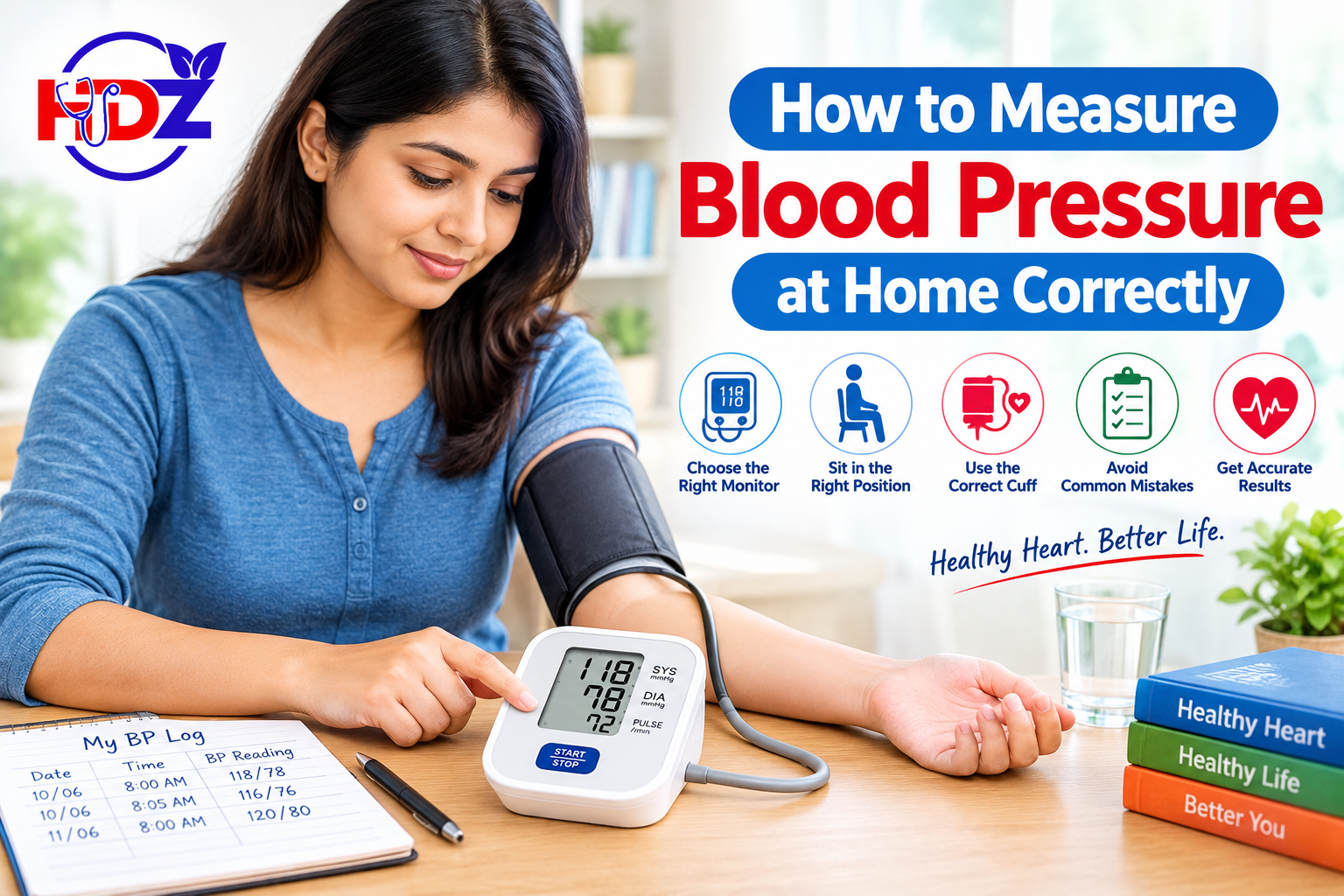
Checking your blood pressure at home can be a useful way to understand your blood pressure over time. It can also help your healthcare professional see whether lifestyle changes or treatment are working.
However, the way you measure your blood pressure matters. Sitting incorrectly, talking during the measurement, using the wrong cuff size or measuring immediately after exercise or caffeine can affect the result.
The good news is that home blood pressure monitoring is relatively simple when you use the right equipment and follow a consistent technique.
In this guide, you’ll learn how to measure blood pressure at home correctly, how to choose a monitor, how to position your body and what to do if your reading is unusually high.
Why Measure Blood Pressure at Home?
Blood pressure can vary throughout the day.
A reading taken in a doctor’s office is only a snapshot. Home monitoring allows you to collect readings under more consistent conditions and can help healthcare professionals understand your usual blood pressure. The American Heart Association recommends home monitoring for people with high blood pressure and says it can also help with confirming a diagnosis or checking whether treatment is working.
Some people also experience white-coat hypertension, where their blood pressure is higher in a medical setting than it is outside the clinic.
Other people can have the opposite pattern, sometimes called masked hypertension, where readings are normal in the clinic but higher at home.
This is one reason repeated measurements can provide more useful information than a single reading.
What Do You Need to Measure Blood Pressure at Home?
You need a reliable blood pressure monitor with an appropriately sized cuff.
The American Heart Association recommends an automatic upper-arm cuff-style monitor. Wrist and finger monitors are generally less reliable, and the cuff needs to fit your upper arm correctly.
When choosing a monitor:
Prefer an automatic upper-arm device.
Check that the monitor has been validated for accuracy.
Make sure the cuff fits your arm.
Follow the manufacturer’s instructions.
Consider taking your monitor to a healthcare appointment so its readings can be compared with clinical equipment.
If you’re in the UK, NHS England recommends choosing a monitor that has been validated for accuracy, including devices listed by the British and Irish Hypertension Society.
How to Measure Blood Pressure at Home: Step by Step
1. Avoid Things That Can Temporarily Raise Your Reading
Before measuring your blood pressure, try to avoid:
Exercise
Smoking
Caffeinated drinks
Other activities that may temporarily raise your blood pressure
The American Heart Association recommends avoiding smoking, caffeine and exercise for at least 30 minutes before measuring. It also recommends emptying your bladder before taking the reading.
If possible, measure your blood pressure under similar conditions each time.
2. Empty Your Bladder
A full bladder can affect blood pressure readings.
Before starting your measurement, use the bathroom if you need to.
This is a small step, but it can help make your measurement more consistent.
3. Sit Quietly for at Least Five Minutes
Don’t immediately put on the cuff and press the start button after walking around.
Instead, sit quietly for at least five minutes before measuring.
During this time:
Don’t talk.
Don’t use your phone.
Don’t exercise.
Try to relax.
The American Heart Association recommends at least five minutes of quiet rest before taking a measurement.
4. Sit in the Correct Position
Your body position matters.
Sit on a chair with:
Your back supported
Both feet flat on the floor
Legs uncrossed
Your body relaxed
Avoid measuring while standing, walking or sitting on a sofa where your back and arm are unsupported.
Your arm should be supported on a flat surface with the upper arm approximately at heart level.
5. Put the Cuff on Bare Skin
Place the blood pressure cuff directly on your bare upper arm.
Do not put the cuff over clothing.
The middle of the cuff should be positioned around the upper arm at heart level, with the bottom of the cuff just above the bend of the elbow.
Follow the instructions supplied with your particular monitor because cuff placement can vary slightly between devices.
6. Keep Your Arm Supported
Rest your arm on a table or another flat surface.
Your arm should be relaxed and supported rather than hanging down.
Keep the cuff and upper arm approximately level with your heart.
Poor arm positioning can affect the accuracy of the measurement.
7. Don’t Talk During the Measurement
Once the measurement begins, stay quiet and still.
Don’t talk to someone nearby, answer your phone or move your arm.
Even small distractions can make it harder to obtain a reliable reading.
The American Heart Association specifically recommends remaining quiet during measurement.
8. Take Two Readings
Don’t rely on just one measurement when monitoring your blood pressure at home.
Take two readings about one minute apart and record both results.
For example:
Reading
Blood Pressure
First reading
136/84 mmHg
Second reading
132/82 mmHg
Your healthcare professional can help you interpret the readings and determine whether you need further monitoring.
9. Record Your Results
Keeping a blood pressure log can be very helpful.
Record:
Date
Time
First reading
Second reading
Which arm you used
Any relevant notes
For example:
Date
Time
Reading 1
Reading 2
Monday
Morning
136/84
132/82
Monday
Evening
129/80
128/78
Tuesday
Morning
134/82
131/80
Your healthcare professional may ask you to record readings for several days.
NICE guidance recommends home blood pressure monitoring for diagnosis using measurements twice daily, ideally morning and evening, for at least 4 days and preferably 7 days, with two consecutive measurements at least one minute apart.
However, the exact monitoring schedule can depend on why you’re checking your blood pressure, so follow your healthcare professional’s instructions.
What Is a Normal Blood Pressure Reading at Home?
Blood pressure categories can differ between guidelines and settings.
According to NHS guidance, blood pressure is usually considered high when it is 140/90 mmHg or higher in a healthcare setting or 135/85 mmHg or higher when measured at home.
However, don’t diagnose yourself based on one reading.
A pattern of readings over time is much more useful.
For a detailed explanation of blood pressure numbers, read:
Remember that “quickly” does not mean there is a safe home remedy that instantly normalises high blood pressure.
What If Your Blood Pressure Is Very High?
A blood pressure reading above 180/120 mmHg is severely high.
If you get a reading this high, wait at least one minute and take another measurement. If it remains very high, seek prompt medical advice.
If very high blood pressure occurs together with symptoms such as:
Chest pain
Shortness of breath
Weakness or numbness
Difficulty speaking
Vision changes
Severe or unusual symptoms
seek emergency medical help. The American Heart Association considers blood pressure above 180/120 mmHg with concerning symptoms a hypertensive emergency.
If you’re in the UK, call 999 for a life-threatening emergency.
Home Blood Pressure Monitoring and Medication
If you’re taking blood pressure medication, home monitoring can help your healthcare professional understand how well your treatment is working.
However, do not stop or change your medication based only on home readings.
The American Heart Association specifically advises people not to stop taking blood pressure medicine without consulting their healthcare professional.
A normal reading while taking medication may mean the treatment is working.
Frequently Asked Questions
Is it better to measure blood pressure in the morning or evening?
Many home-monitoring plans use both morning and evening measurements. NICE recommends morning and evening measurements when home monitoring is being used to help confirm hypertension.
Follow the schedule recommended by your healthcare professional.
How long should I sit before checking my blood pressure?
Sit quietly for at least five minutes before taking the measurement. Avoid talking or using your phone during this rest period.
Can I measure blood pressure after drinking coffee?
It is better to wait. The American Heart Association recommends avoiding caffeine for at least 30 minutes before measuring blood pressure.
Should I take two blood pressure readings?
Yes. Take two readings approximately one minute apart and record the results.
Is a wrist blood pressure monitor accurate?
Upper-arm monitors are generally preferred. The American Heart Association recommends an automatic upper-arm cuff-style monitor because wrist and finger devices can be less reliable.
Can I measure blood pressure over clothing?
No. The cuff should be placed directly on the bare upper arm.
Why is my blood pressure different every time?
Blood pressure naturally varies. Stress, activity, caffeine, smoking, body position, time of day and measurement technique can all affect a reading. That’s why repeated measurements under consistent conditions are useful.
Final Takeaway
Knowing how to measure blood pressure at home correctly can help you get more reliable information about your cardiovascular health.
Use a validated upper-arm monitor with the correct cuff size, avoid caffeine, smoking and exercise shortly before measuring, rest quietly for at least five minutes, sit with your back supported and feet flat, keep your arm supported at heart level, and take two readings about one minute apart.
Most importantly, don’t make medical decisions based on a single number. Keep a record of your readings and discuss persistent high or unusual results with a qualified healthcare professional.
Medical Disclaimer
This article is for general educational and informational purposes only. It is not a substitute for professional medical advice, diagnosis or treatment. Blood pressure targets and treatment can vary depending on age, pregnancy, medical conditions and individual cardiovascular risk. Never stop or change prescribed medication without consulting a qualified healthcare professional. If you experience severe or life-threatening symptoms, seek emergency medical care.
References
NHS – Blood Pressure Test
NHS – High Blood Pressure
American Heart Association – Home Blood Pressure Monitoring
American Heart Association – Home Blood Pressure Measurement Instructions













Add a Comment